


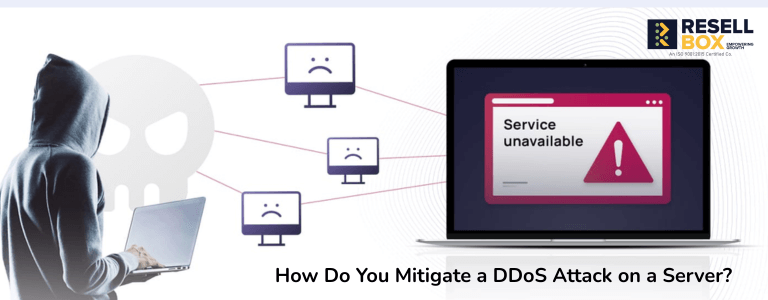
Distributed Denial-of-Service, DDoS attacks have proven to be among the most significant challenges for online services such as web hosting platforms. As DDoS attacks continue to grow in both frequency and intensity, implementing an effective mitigation strategy is crucial to keeping your server online and ensuring uninterrupted service for your customers.
In this blog post, we’ll explore effective DDoS mitigation techniques, provide actionable best practices, and discuss industry statistics that emphasize why investing in these defenses is more critical than ever.
Table of Contents
- Understanding DDoS Attacks
- Key Strategies for Mitigating DDoS Attacks
- Tools and Techniques for DDoS Defense
- Practical Takeaways and Examples
- Conclusion


Understanding DDoS Attacks
A DDoS attack occurs when a large number of compromised devices flood a server with an overwhelming volume of traffic, which consumes bandwidth and server resources until legitimate requests cannot be served. These attacks can be broadly categorized into:
- Volumetric Attacks: Aim to saturate network bandwidth with high volumes of data (measured in Gbps/Tbps). For instance, Cloudflare reported a volumetric attack that peaked at 5.6 Tbps.
- Protocol Attacks: Exploit weak points in the server or network equipment either by sending malformed packets or frustrating connection resources through excessive packets per second, or PPS
- Application Layer Attacks: Against the web server itself using seemingly legitimate HTTP requests as the resulting attack can consume the server’s processing capacity exhaustively, calculated in requests per second or RPS.
Each type of attack requires a distinct mitigation strategy, making it essential to identify the specific attack type.
Key Strategies for Mitigating DDoS Attacks
A proper DDoS mitigation plan must be proactive, layered, and dynamic. Some of the best practices to be considered are:
- Minimize the Attack Surface:
- Network Segmentation and Firewalls: Limit open ports and services to the public. Configure security groups and firewalls to only permit essential traffic to help reduce vulnerability.
- Isolation of Critical Assets: Place services in isolated environments such as VPCs to safeguard sensitive systems from general attacks.
- Implement Scalable Infrastructure:
- Load Balancing and Auto Scaling: Use load balancers to spread traffic evenly across multiple servers. Auto scaling enables your infrastructure to handle sudden spikes in traffic by adding resources on demand.
- Integrated Content Delivery Networks (CDN): Leveraging a CDN not only improves site performance but also absorbs and distributes malicious traffic away from your origin server.
- Employ Real-Time Traffic Monitoring and Rate Limiting:
- Traffic Profiling: Track baseline traffic patterns to catch anomalies quickly. New mitigation systems employ machine learning algorithms to detect anomalies that could indicate an attack.
- Rate Limiting: Set limits on the number of requests coming from a single IP or region, which can help block excessive or suspicious requests before they overwhelm your server.
- Use Specialized DDoS Mitigation Solutions:
- Scrubbing Centers: Route incoming traffic through high-capacity “scrubbing” centers that filter out malicious traffic while allowing legitimate requests through.
- Hybrid Solutions: For a hybrid solution, on-premises hardware is combined with cloud-based DDoS protection services that ensure even if one of the layers becomes overwhelmed, others will still maintain service availability.

Tools and Techniques for DDoS Defense
A robust defense often leverages multiple technologies:
- Web Application Firewalls (WAF): WAFs are inspecting HTTP/HTTPS traffic in real-time while blocking malicious requests according to specified rules. Its strength lies specifically against application-layer attacks.
- Intrusion Detection and Prevention System (IDS/IPS): Monitoring the network is done in real time. Network traffic is being automatically blocked on detection of predefined attack signatures by these systems.
- Anycast networks: Any incoming traffic, being routed via multiple data centers, lowers the chance of server overload in case one becomes overly burdened.
- Rate Limiting and IP Reputation Services: These techniques allow you to filter and throttle traffic as a function of past behavior and known malicious IP addresses.
- Behavioral Analysis: Advanced DDoS mitigation systems continuously analyze patterns in traffic for purposes of distinguishing legitimate user activity from attack traffic.
- Visual Suggestion: Consider adding an infographic that visually illustrates the multi-layered defense model from local firewalls through to cloud-based scrubbing centers, as well as real-world statistics such as Cloudflare mitigating 71 million RPS attacks.
Practical Takeaways and Examples
- Case Study Insight: Cloudflare mitigated an HTTP DDoS peak of 71 million requests per second in February 2023. This was a large DDoS attack that was neutralized within seconds when the traffic was automatically rerouted towards their scrubbing centers. Hence, there is a need for systems that can provide constant mitigation.
- Actionable Tip: Regularly test your DDoS mitigation measures using simulation tools. This not only ensures that your defenses are up to date but also helps in fine-tuning rate limiting and traffic filtering rules.
- Performance Metrics: Your hosting plan should include provisions for DDoS protection at the network (L3/L4) and application (L7) layers. With ResellBox’s integrated DDoS defense and high-speed connectivity, you can expect minimal downtime even under high attack volumes.
Visual Suggestion: A table comparing different DDoS mitigation strategies (e.g., load balancing, auto scaling, scrubbing centers) with their respective benefits and limitations can be very effective here.
Conclusion
A DDoS attack on your server is not a one-size-fits-all affair it needs a well-planned, multi-layered defense strategy that includes proactive monitoring, scalable infrastructure, and specialized mitigation tools. You can protect your server from even the most sophisticated attacks by understanding the types of DDoS attacks and best practices such as reducing your attack surface, utilizing load balancers, rate limiting, and integrating cloud-based protection solutions.
With ResellBox’s robust, high-speed hosting solutions, you can safeguard your online presence from DDoS threats. Get started today and experience secure, uninterrupted hosting.